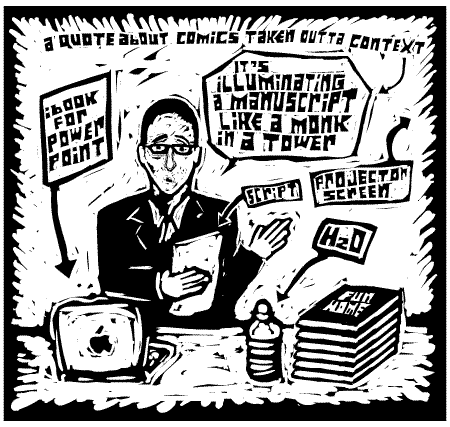
After scarfing down some tacos with about 50 soccer brats at the Chipotle across the street, last night we went to see Alison Bechdel read at the Joseph-Beth in Legacy Village. (Here’s Alison’s own blog of the event.) They had the reading hidden upstairs in this special conference room that had a fantastic projector. Then Harvey Pekar got up and gave an introduction that emphasized her skills as a writer:
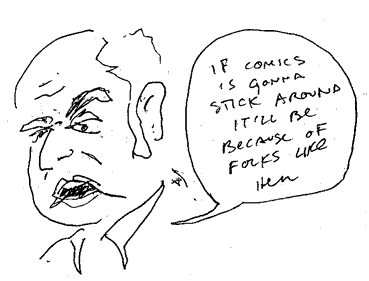
Genuinely thrilled, Alison said, “That’s like the Grateful Dead introducing Phish.”
She started out by reading from the first chapter of Fun Home. Using Powerpoint, she projected the individual panels onto the projection screen while she read the narration from a script. (She let the speech bubbles inside the panels speak for themselves.) It was really soothing, and blowing the panels up several times bigger than their actual size you could see every hatch, every stroke, every variation in the inkwash. Meg said it was like seeing slides in architecture studio — you could see the way the imagery was working in a way different from reading the book.
“The thing about doing a graphic novel is that it’s a really physical process,” Alison said. “You have to know every square inch of the book. So there’s no way for me to talk about the book without showing it to you.”
It was truly using Powerpoint for good and not for evil, and I’m convinced now that Powerpoint is the key to presenting comix readings.
After she finished the chapter, she went into a slideshow detailing how she wrote the book.
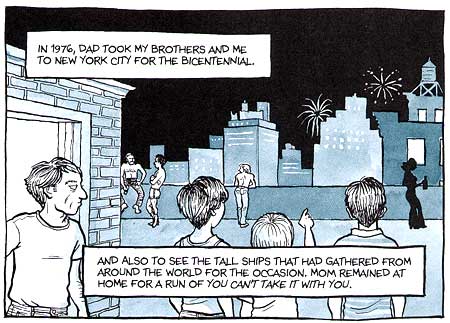
What blew me away is how much writing leads her process. She used this panel from page 189 to illustrate:
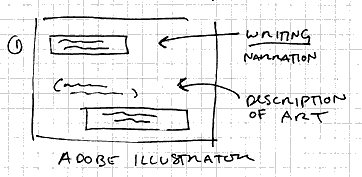
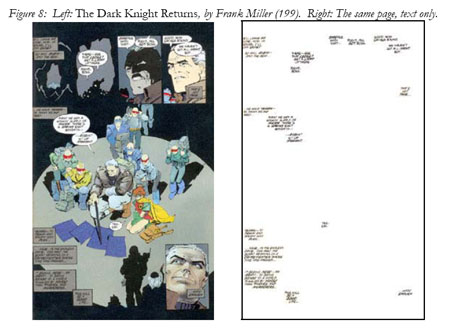
She starts out by using Adobe Illustrator to type out her narration and dialogue into boxes. (She also includes a textual description of how the art will look.) Then she arranges the text around the page how she wants. At this stage, it looks very much like visual poetry. In her senior thesis, an undergrad colleague of mine, Elisabeth Price, reverse-engineered a Frank Miller page this way:
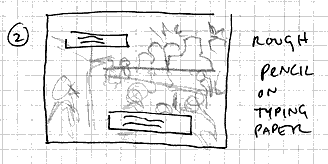
After getting the text just right, she rough pencils the panel on the typing paper.
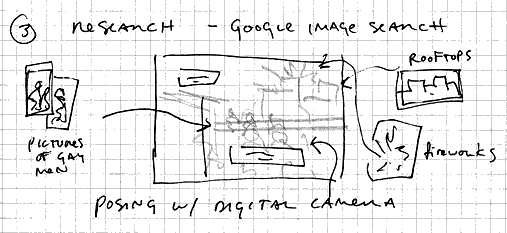
The next step involves lots of photographic research — for this panel, she researched pictures of gay men from the period, fireworks, rooftops, water towers, and random people sitting on rooftops.
“I couldn’t have done this book without Google Image Search.”
She also takes digital pictures of herself in every pose that takes place in the panel.
“After this step,” she said, “the work is ninety-percent done.”
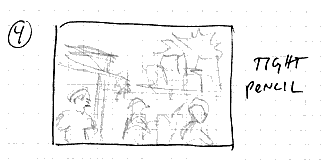
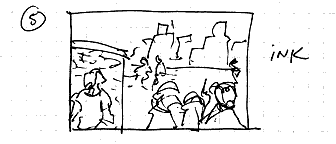
And yeah, the next steps are pretty standard comics stuff — tight pencil, then inking, erasing the pencil. Then the whole thing is scanned into Photoshop and cleaned up.
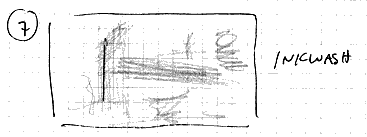
She did a gray inkwash for the shading that was later turned green by her publisher.
“It was weird because I never knew how it was all going to come together.”
Watching her describe her process, I thought once again about how I believe that comics is really collage — cobbling together layers of text and images. It’s the style that unifies the work — the style that convinces you that all this stuff is supposed to be in the same place.
After her process presentation, she read from chapter four, and then it was time for questions and answers.
She talked about her relationship with her mom, about the unexpected success of the book, and the bizarre mix of excitement over its success, and the burden of having her family story everywhere. Harvey chimed in by telling an anecdote about Robert Crumb and his reaction to Terry Zwigoff’s documentary about him.
“Crumb didn’t want to be bothered,” Harvey said. “He figured Terry would do the film, and everyone would forget about it.”
Then Harvey’s wife, Joyce Brabner, said: “Crumb’s first wife, Dana, has been trying to get a book published for years. It’s called, It Was My Life Too, Goddamnit!”
Afterwards, Alison signed books. Here’s a funny story about how much of a perfectionist she is:
She was going to draw a portrait of one of the women in line, but she said she didn’t have a pencil. “Does anybody have a pencil?” So I gave her one of those golf pencils you get at Ikea, and she did the sketch, then inked it.
I tried to draw her several times during the night, but just couldn’t get it right. Part of the problem was that I was caught off guard by her looks: from photos, she looks very, well, masculine and angular (butch hair, dark suit, glasses), but when you really start trying to draw her, looking close at her face, you realize that her lines are much softer in real life…
Meg and I, we’re always arguing about whether it’s more invasive to draw someone or take their picture. You certainly see a person much clearer by drawing them.
A lesson that maybe Alison has learned herself.
Holy Moses, Austin. Have you been up all night? Your explanation of my talk is more thorough and detailed than my own notes. I love your drawing of me. You’re a scratchboard genius. And thank you for the copy of Birdseed! I’m so happy to have discovered your work.
alison, the pleasure was all mine!!
Austin, if you don’t mind, I’ve printed out your explanation of Alison’s methodology and will post it at my gallery, pine street art works, where Alison is currently showing. You can imagine how many people want to know more about how she does her work, even though she has explained it in text next to the images. Having your drawings makes it so clear.
Thank you so much. I’ve never been to one of Alison’s talks, and I learned a lot.
i don’t mind one bit!
Hi Austin,
I arrived at your blog from Christine’s blog that I got to from Alison’s blog.
I like your wood-cut-like printy thing of Alison.
I was also struck by the difference in Alison’s appearance in photos and how she looked in person when I saw her in Philadelphia. Her voice has such a soft feminine quality to it, it’s hard not to be impacted by that when you look at her…but, she does have a delicate look in person…that doesn’t show through in her photos.
When I approached her to get my book signed I told her that she was much smaller in person than I had expected, and then I think I said, “you’re little”…she stood up out of her chair, puffed up her chest and said, “No, I’m Big!”. She’s fun, incredibly talented and a total sweetheart, isn’t she?
yeah she was great — and i think that’s so cool that you recognized the difference too
Hi again Austin,
I was wondering exactly how that wood-cut-looking thingy was made…will you share? Also, I followed the power point for good, not for evil link…ya gotta love that…too amusing and too,l too true. You made me laugh. Thanks for that!
Soozie
ah, but a magician never reveals his secrets!
Alas…I suppose you are right…
More on the technique: