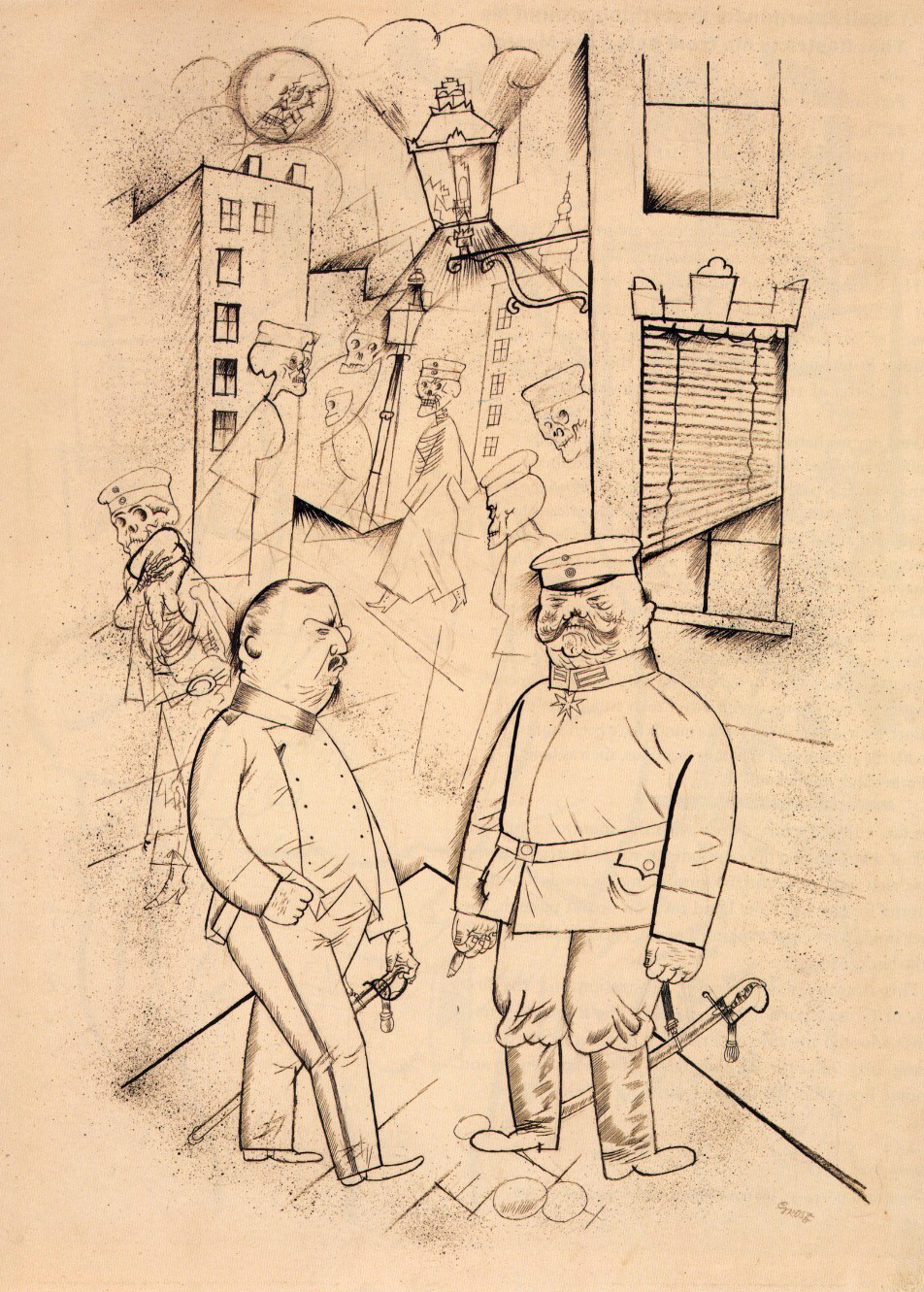
Pimps of Death (1919)
“It was my first encounter with the works of the German artist George Grosz, when I was in my twenties, which showed me that drawing need not just be a space-filler in a newspaper: in the hands of an honest man, drawing could be a weapon against evil….Look at [his drawings] and you know the world is sick. You may say that he was sick too — but it is a common mistake to believe that sick drawings indicate a sick mind, rather than a reflective indictment of society. His drawings scream indelibly of human depravity; they are an eloquently barbaric response to life and death, right through the First World War and into the wild, helpless excesses of 1920s Berlin, which rotted away the lives of all those caught up in its suicidal glee.”
—Ralph Steadman
My first encounter with George Grosz (1893-1959) was at the Metropolitan Museum of Art’s glorious show, “Glitter and Doom: German Portraits from the 1920s,” which we happened to stumble upon during our honeymoon to New York last year. After seeing his work, it was unsurprising to learn that Grosz had a major influence on some of my drawing heroes, including R. Crumb and Ralph Steadman. In the past week I’ve been sifting through a fat stack of his books borrowed from the art library in the hopes of sharing some scans of my favorite drawings. Barring “Pimps of Death” (shown above), the rest of the drawings are presented in chronological order.
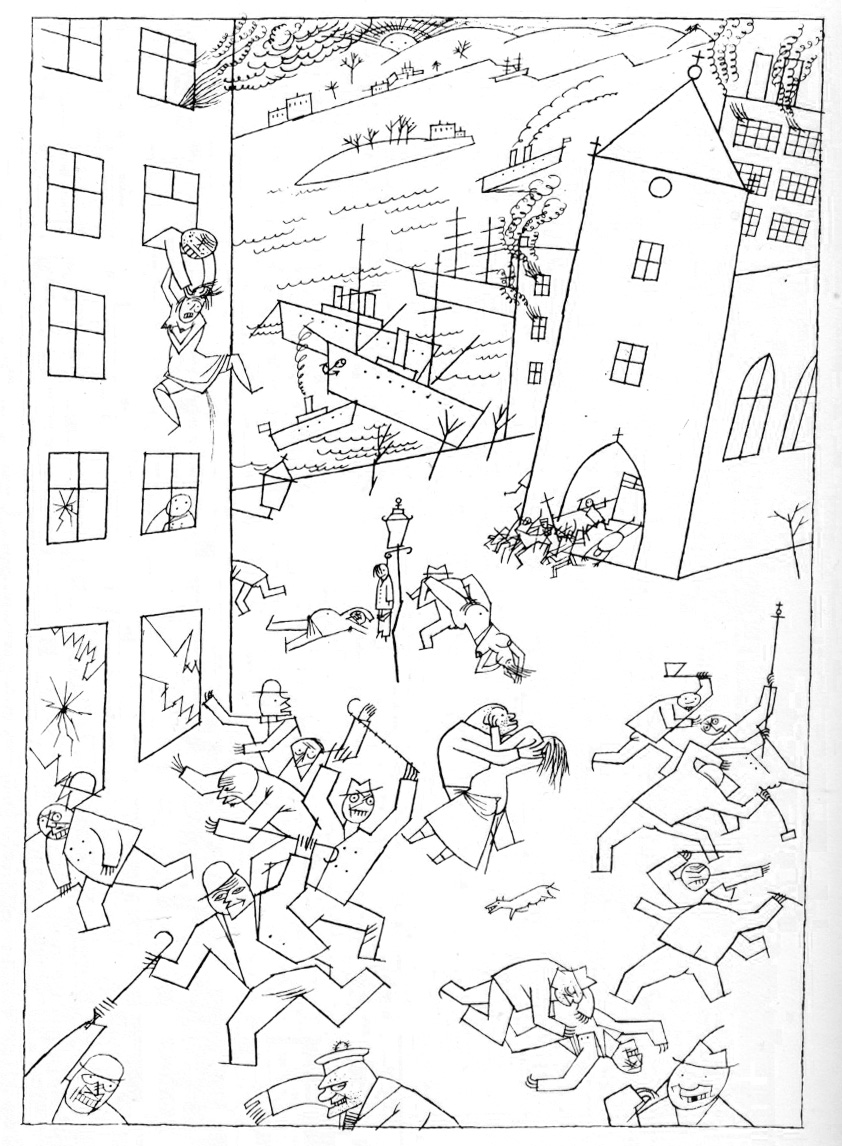
Riot of the Insane (1915)
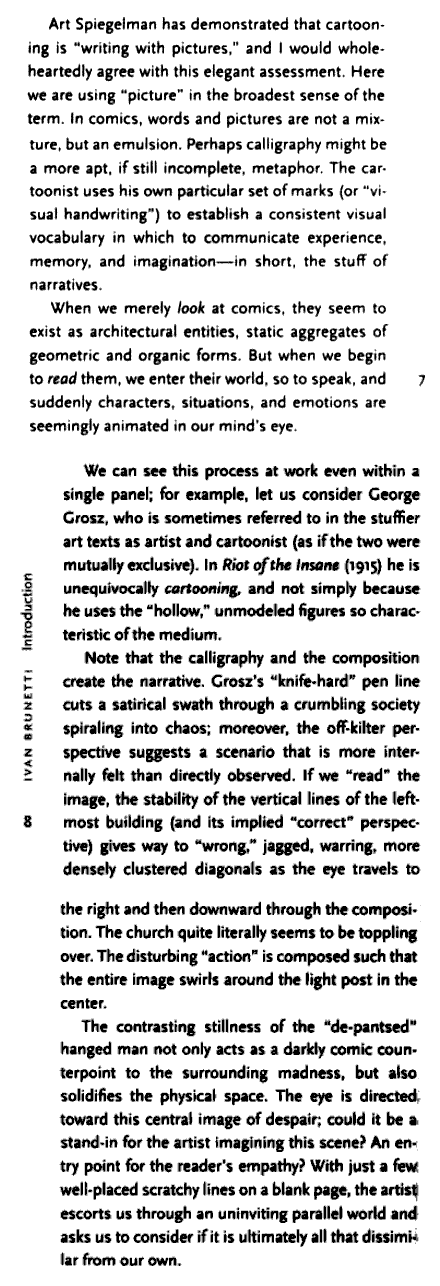
“Riot of the Insane” might be familiar to anyone who has a copy of Ivan Brunetti’s Anthology of Graphic Fiction — in the introduction Brunetti analyzes the piece in terms of cartooning:
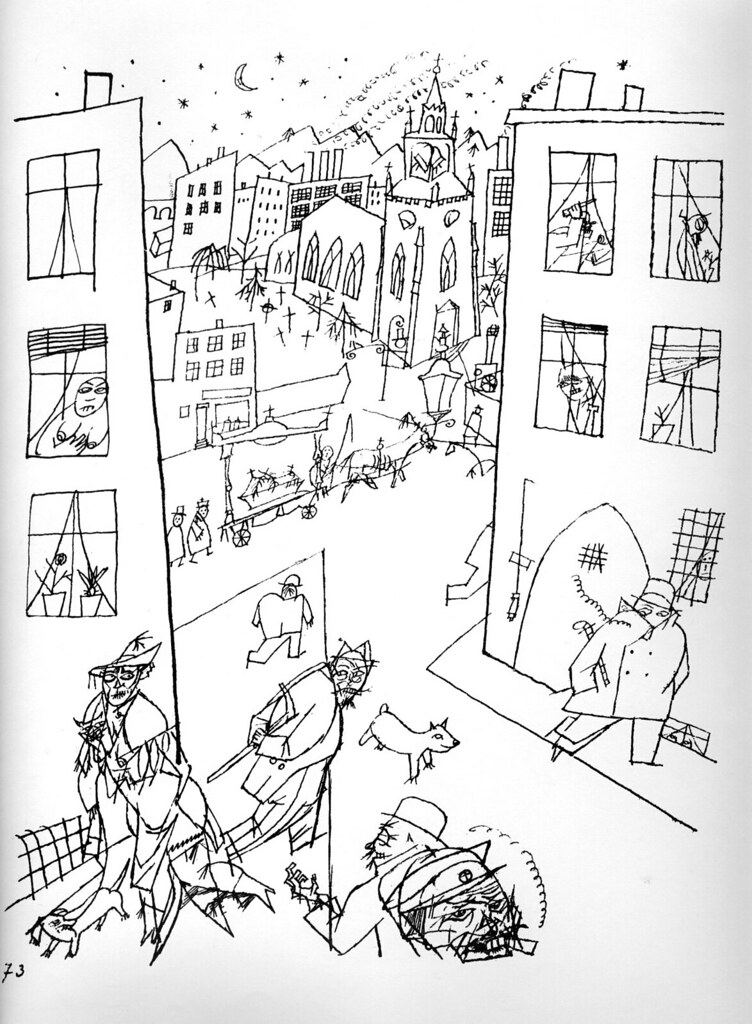
I have been struggling lately with how to depict space, and specifically, people in space. These drawings are amazing to me because they look like they were drawn by someone who knew the rules but didn’t care about them.

Family (1916)
“Family” might be my favorite. The way the baby swings with four legs, the flowers, the dogs, the man’s face (what is he doing there? is he spying? bringing a message?), the crosses, the windmill, the way it looks like the sun is setting over a horizon that is several thousand feet above where it “should” be. And where did that tree come from?
Suburb (1917)
Many of these drawings came from the collection, Ecce Homo, — the words come from the Latin that Pilate spoke while presenting Christ: “Behold the man.” Some artists in Grosz’s circle took this to mean “How pitiable is man”; others “What a beast man is.”

Friedrichstrass (1918)

Eva (1918)
The more I look at these drawings, the more they look less like drawings and more like collages. It’s no coincidence — Grosz collaborated with the famous anti-Nazi photomontage artist John Heartfield.
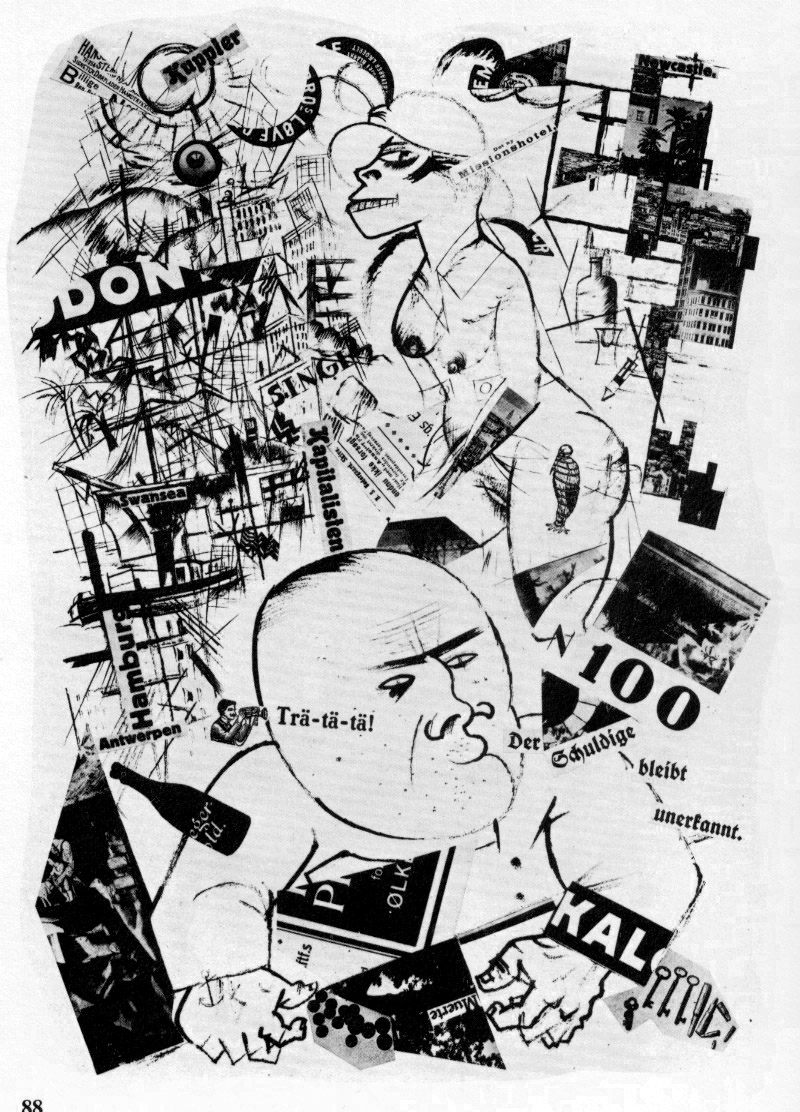
The Guilty One remains unknown (1919)
It’s impossible for me to look at “Cross Section” as just a drawing:

Cross Section (1920)
It’s a confection.
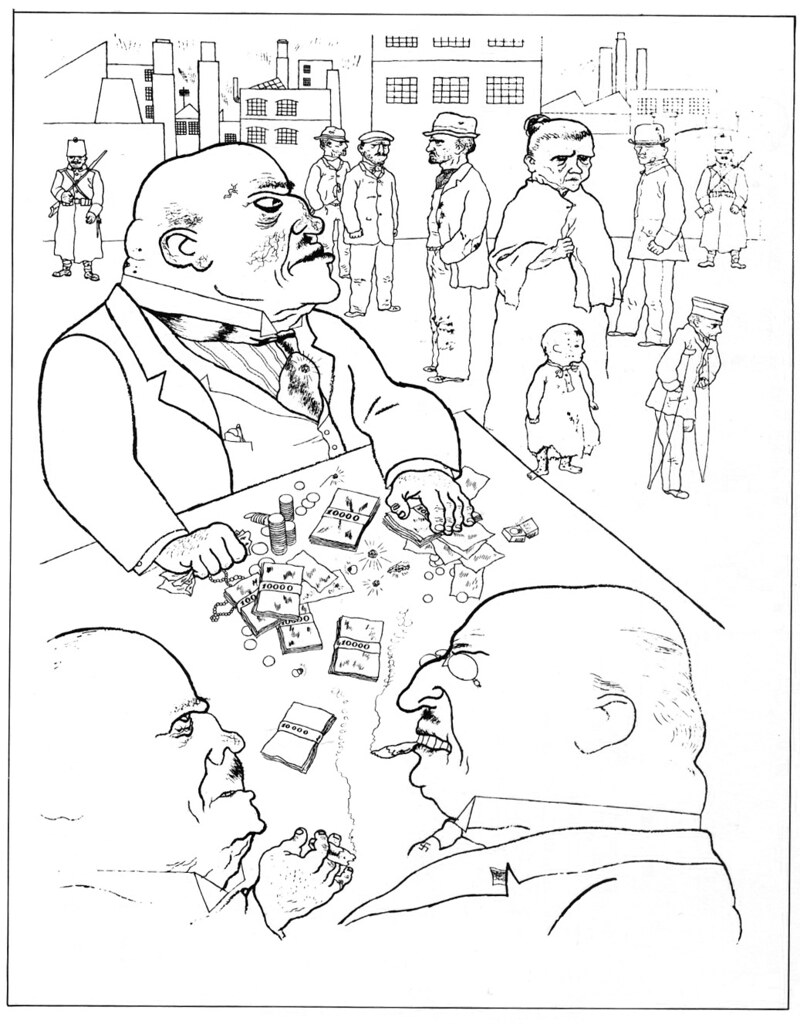
Toads of Property (1921)
From the beginning, the models he looked to were not the plaster casts of antique sculptures he was forced to draw when he studied in Dresden and Berlin; they were, rather, taken from the realm of popular imagery. The figures he admired were not the heroes of antiquity and history but those of dime novels. Grosz studied and collected children’s drawings and toilet graffiti. He was fascinated by garish pictures of horrifying atrocities and catastrophes of the sort displayed at carnivals and riflemen’s gatherings, and he loved the lurid illustrations in western novels and detective stories. And of course he knew the great caricaturists of the past: William Hogarth, whom he explicitly names as a model, Honore Daumier, Wilhelm Busch. Over the years he extracted from these widely divergent sources a unique and characteristic drawing style. With this style, he prowled the metropolis, studying its marginal districts, circling around such subjects as crime, nightclubs, bordellos. He was fascinated by the lower depths of society and of people.—Matthias Eberle

I Shall Exterminate Everything around Me That Restricts Me from Being the Master (1921)
Further reading:
“One Day We’ll Get Even,” 57 drawings
George Grosz: An Autobiography
forgot to post this one:
Those are so completely disturbing (and awesome). I have to pick #2, the riot scene, as my favorite of the bunch. My art history is rusty (i.e. non-existent), but I guess that’s sort of, what, cubist? Cool to see some of that work from non-painters. (Illustration… always the bridesmaid)
I got Brunetti’s anthology for Christmas last year, read it for a week or two and then set it aside, and it’s been in my nightstand pile ever since. One New Year’s resolution for this year is getting that book finished during January.
I have been struggling lately with how to depict space
Man, aren’t we all?
Crumb quoted Grosz in the Kafka book he drew. I also see something of Grosz in Santoro, especially in Storeyville. I Shall Exterminate… would fit right in there.
Mark: I have no idea what to call it, other than crazy.
Pete: Folks tend to have mixed feelings about that anthology. I think it’s pretty great.
Tim: that Crumb Kafka book is so rad– I don’t remember where that quote is, though! You can browse it on amazon
Ach! It’s only $10…I guess I should go ahead and buy it…
Here are a couple of terrible cell pics from Crumb’s Kafka book that Tim mentioned:
The quote is this:
The Kafka book is really great — I should quit being a cheapskate and buy it.
Brilliant, very inspirational drawings, thanks for publishing them!
To me the Grosz drawings always appear to be somewhat like dream journals, where the unconscious material is processed outwardly with pencil and paper, only he was looking at a nightmare that was happening all around him, in real time. His style was consistent with the day, but his spin on it was unique and the subject matter far more social and political than many of his contemporaries. I have always admired his work.
Grosz means cent in polish
Hi,
I would like to know the title, the media, and the year of the drawing by George Grosz. An older man at a table in a bedroom with his head on the tabk=le while holding a cane. It can be seen here
V/R
Clark Philogene
Clark, dude, I am not a George Grosz expert. Sorry!