BLOG ARCHIVES

NOTES ON WRITING AND DRAWING

Craft, technique, and theory of writing and cartooning.

THE POWER OF CAPTIONS: WORDS ADDED TO PICTURES

Monday, September 1st, 2008

Yesterday, I was thinking about telling a story in pictures without words, and so today, in the aftermath of all the Sarah Palin pregnancy conspiracy theory madness, I started thinking about telling a story with words added to pictures.

The documentary filmmaker Errol Morris had it nailed in his NYTimes article, “Photography As A Weapon,” about photoshopping, forgeries, image processing, captions (and John Heartfield and King Geedorah!):

Doctored photographs are the least of our worries. If you want to trick someone with a photograph, there are lots of easy ways to do it. You don’t need Photoshop. You don’t need sophisticated digital photo-manipulation. You don’t need a computer. All you need to do is change the caption.

I don’t know what these buildings were really used for. I don’t know whether they were used for chemical weapons at one time, and then transformed into something relatively innocuous, in order to hide the reality of what was going on from weapons inspectors. But I do know that the yellow captions influence how we see the pictures. “Chemical Munitions Bunker” is different from “Empty Warehouse” which is different from “International House of Pancakes.” The image remains the same but we see it differently.

Change the yellow labels, change the caption and you change the meaning of the photographs. You don’t need Photoshop. That’s the disturbing part. Captions do the heavy lifting as far as deception is concerned.

If you read through this Daily Kos piece, the writer presents pictures of Palin at various stages of her pregnancy looking thin and trim as “evidence” that she wasn’t really pregnant with her fifth child, but it was her daughter, Bristol, who was pregnant. The article is simply a list of photographs with captions—and the captions control how we read the photographs.

Many folks pointed to this picture as evidence of a Bristol Palin “baby bump”:

Palin Family

A picture which would otherwise be an innocuous portrait of a nice-looking family is turned into a sinister conspiracy by the words, or caption, adjacent to it.

bristol palin is pregnant

The moral of the story is that pictures can say whatever we want them to say, provided we use the right words.

The power of captions can be used for good, or it can be used for evil. For a cartoonist, it’s a potent weapon, which can take any drawing and turn it in many different ways. Take this hasty doodle:

captions

Depending on which captions I use, you’ll get a different picture of who I am, yes? In comics, it seems, the old creative writing adage “show don’t tell” is useless—you can certainly tell as much as you show, show what you tell, or tell what you show.

this is not a pipe

I’d love to hear your own thoughts on the use of captions in the comments below. I also recommend taking a look at Derik Badman’s article, “Text In Comics.”

WORDLESS BOOKS AND WOODCUT NOVELS

Sunday, August 31st, 2008

wordless books

A story is told in images.

You can do it with words, you can do it with pictures, or you can do it with both.

For those interested in doing it just with pictures, there are two books in print right now on woodcut novels and wordless books that are absolute must-reads. First, for an overall sampler and history of the form, get David Beronä’s Wordless Books: The Original Graphic Novels. Beronä is the Library Director of the Lamson Library at Plymouth State University, and he’s been researching woodcut novels and wordless books for twenty years.

Beronä begins with the granddaddy of it all and my personal favorite, woodcut artist Frans Masereel, and points out three major elements that were in the air when Masereel started to create his works:

1) the revival of the woodcut, mostly thanks to the German Expressionists
2) silent cinema, and a “public already familiar with black-and-white pictures that told a story”
3) newspaper cartoons

Beronä goes on to trace the development of the form, including some of my other favorites: the woodcut novels of Lynd Ward (whose name spelled backwards is “draw”) and Otto Nuckel, Milt Gross’s cartoon novel He Done Her Wrong, and Istvan Szegedi Szuts’ ink + brush piece My War.

In the book’s introduction, the the fantastic cartoonist and scratchboard genius Peter Kuper mentions the biblical story of the Tower of Babel and locates wordless woodcut stories as part of humanity’s ongoing quest to use images and symbols to “sidestep our language barriers and create…stories that can be universally understood.”

“Looking for similarities among these artists you find that many share a contrasting use of black and white, dark and light, with a dash of yin and yang. Most also share a connection through choice of materials. From wood engraving to leadcut to linoleum printing, these artists have chosen a medium with a process beyond the immediacy achieved of putting pen to paper. There is a unique quality to these print images that is arresting and iconic. It’s as thought the art were announcing a rally and needed to be read as easily on a lamp post as seen in a book.”

It’s no coincidence that Otto Neurath turned to woodcut artist Gerd Arntz to create the symbols for his celebrated Isotype system of pictorial communication. There’s something in the stark black and white of woodcut and ink and brush that leads to that iconic quality…

graphic witness

…which brings us to the second book and perfect companion to Wordless Books, Graphic Witness: Four Wordless Graphic Novels, which collects in their entirety Frans Masereel’s The Passion of a Man, Lynd Ward’s Wild Pilgrimage, Giacomo Patri’s White Collar, and Laurence Hyde’s Southern Cross. The book was edited by woodcut artist and printmaker George A. Walker. From Walker’s introduction:

As a woodcut artist, I’ve always been attracted to black-and-white art. I think it has something to do with the rich contrasts. I love a deep rich black that you can stare into, forever. The effect is like our colorful world torn down to its base so that we can read the unerlying message. The truth is always easier to take in black and white. Typography is always more legible in black and white, so why would we be surprised to find the readability of artworks enhanced by those contrasts? Remove the grays and hues, reduce the image to lines and solid blacks, and open up the whites. You have a thing of beauty and simplicity.

Another way to understand our attraction to black and white is through the science of how we see. The human eye consists of rods and cones that process the reflected light of our world. These signals are then translated into color and form for processing by our brain. The rods, which are sensitive only to black and white, are the first components activated in a baby’s eyes. That’s why infants readily respond to high-contrast black-and-white images. We are hardwired to appreciate black-and-white artwork.

In addition to the great service of publishing these complete works together, the introduction to the book gives a history and overview of relief printmaking techniques (see this MOMA infographic, “What Is A Print?“), focusing on the tools used to create the images:

Clement Moreau linocut from the book GRAPHIC WITNESS

As anyone who’s familiar with my comics and illustration work should know, I owe a great debt to this form and these artists, and I can’t wait to finish this book of words, so I can get back to making stories out of pictures again! (For those who haven’t seen my previous feeble attempts, see: “Birdseed,” “After the War,” and my abandoned graphic novel, “A Terrible Calamity At Sea!“).

And for those interested in digging further into this subject, check out my Amazon Listmania! List for Wordless Graphic Novels + Comics.

WILLIAM BURROUGHS 1965 PARIS REVIEW INTERVIEW

Wednesday, August 20th, 2008

In 1965, the writer William Burroughs was interviewed by the Paris Review. He was 50, living in a hotel in his hometown of St. Louis. A short time later, across the pond, an artist named Tom Phillips read the interview, and decided to play with Burroughs’ cut-up method by doing “column-edge” poems with the New Statesman. He decided to take the method a bit further. He walked to a bookshop, and grabbed the first book he could find for 3 pence. He started blacking out the words, first with just a pen. It was beginning of a 40-year project now known as A Humument.

It’s easy to see how Phillips was inspired: this interview presents a brilliant mind at work, thinking about images and words and writing and how they go together. Burroughs claimed he was most interested in “dreams” and the “juxtaposition of word and image”: “precisely how word and image get around on very, very complex association lines.” He was an avid user of scrapbooks, kept files of newspaper clippings and photographs for character studies, and always wrote down his dreams. He also had a really interesting method of journaling: in three parallel columns, he would record the day’s events, his memories and what he was thinking at the time, and quotes from what he was reading. He called all this “taking coordinates”—a kind of “time travel” to see if he could “project” himself into one single point in time.

Combine this interview with the terrific Beat exhibit I saw earlier this year, and consider me impressed. (I confess that I’ve never made it through any of his books—first up on my list is his collaboration with Brion Gysin [the man who REALLY deserves most of the credit for the cut-up technique...more on that later], The Third Mind.)

Some of my favorite bits:

Seeing

Most people don’t see what’s going on around them. That’s my principal message to writers: For Godsake, keep your *eyes* open. Notice what’s going on around you. I mean, I walk down the street with friends. I ask, “Did you see him, that person who just walked by?” No, they didn’t notice him.

Writers and technology

I think that words are an around-the-world, oxcart way of doing things, awkward instruments, and they will be laid aside eventually, probably sooner than we think. This is something that will happen in the space age. Most serious writers refuse to make themselves available to the things that technology is doing. I’ve never been able to understand this sort of fear. Many of them are afraid of tape recorders and the idea of using any mechanical means for literary purposes seems to them some sort of a sacrilege.

The origins of the cut-up technique

A friend, Brion Gysin, an American poet and painter, who has lived in Europe for thirty years, was, as far as I know, the first to create cut-ups. His cut-up poem, Minutes to Go, was broadcast by the BBC and later published in a pamphlet. I was in Paris in the summer of 1960; this was after the publication there of Naked Lunch. I became interested in the possibilities of this technique, and I began experimenting myself. Of course, when you think of it, The Waste Land was the first great cut-up collage, and Tristan Tzara had done a bit along the same lines. Dos Passos used the same idea in ‘The Camera Eye’ sequences in USA. I felt I had been working toward the same goal; thus it was a major revelation to me when I actually saw it being done.

Objections to the cut-up technique

There’s been a lot of [objections to the cut-ups], a sort of a superstitious reverence for the word. My God, they say, you can’t cut up these words. Why can’t I? I find it much easier to get interest in the cut-ups from people who are not writers—doctors, lawyers, or engineers, any open-minded, fairly intelligent person—than from those who are….People say to me, “Oh, this is all very good, but you got it by cutting up.” I say that has nothing to do with it, how I got it. What is any writing but a cut-up? Somebody has to…*do* the cutting up. Remember that I first made selections. Out of hundreds of possible sentences that I might have used, I chose one.

World-building

You know, they ask me if I were on a desert island would I go on writing. My answer is most emphatically yes. I would go on writing for company. Because I’m creating an imaginary—it’s always imaginary—world in which I would like to live.

Read the complete article.

Any fans of Gysin or Burroughs out there? What texts would you recommend?

THE ART OF LIVING BY SAUL STEINBERG

Tuesday, August 19th, 2008

Saul Steinberg is one of my favorite cartoonists of all time. Tonight I found this 1949 first edition of his second book, THE ART OF LIVING, in a Half Price Books for $12. (See my other posts on Steinberg.)

THE ART OF LIVING by Saul Steinberg

THE ART OF LIVING by Saul Steinberg

THE ART OF LIVING by Saul Steinberg

Dig the line work:

THE ART OF LIVING by Saul Steinberg

The use of collage:

THE ART OF LIVING by Saul Steinberg

The counterfeit handwriting:

THE ART OF LIVING by Saul Steinberg

THE ART OF LIVING by Saul Steinberg

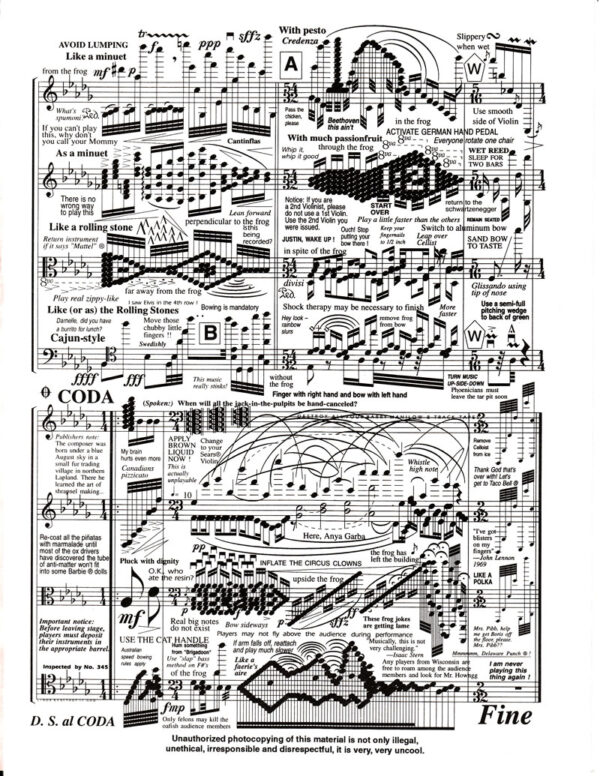
The music notation paper:

THE ART OF LIVING by Saul Steinberg

THE ART OF LIVING by Saul Steinberg

THE ART OF LIVING by Saul Steinberg

Terrific stuff. On cartoonist Mike Lynch’s blog, you can see some great scans of Steinberg’s first book, ALL IN A LINE.

HOW TO LOOK AT ART (LIKE AN ARTIST)

Monday, August 11th, 2008

How To Look At Art (like an artist)

  1. Figure out what’s worth stealing
  2. Move on to the next thing

Rinse and repeat.

THE KEY IS NOT LYING ABOUT EVERYTHING

Monday, August 11th, 2008

Frederic Bourdin

From a New Yorker article about the French serial imposter Frédéric Bourdin (nicknamed “The Chameleon”):

…he tried to elevate his criminality into an “art.” First, he said, he conceived of…whom he wanted to play. Then he gradually mapped out the character’s biography, from his heritage to his family to his tics. “The key is actually not lying about everything,” Bourdin said. “Otherwise, you’ll just mix things up.” He said that he adhered to maxims such as “Keep it simple” and “A good liar uses the truth.” In choosing a name, he preferred one that carried a deep association in his memory….He compared what he did to being a spy: you changed superficial details while keeping your core intact.

This, too, is what the writer does…

THE NEUROSCIENCE OF NOT-KNOWING

Sunday, August 3rd, 2008

Trying hard to solve that impossible problem? Hit the topless bar, take a warm shower, and sleep on it.

Three tips I gathered from Jonah Lehrer’s great article in the July 28th New Yorker called “The Eureka Hunt,” all about “insight,” where our good ideas come from, when they come to us, and why.

The formula:

total immersion → relaxing distraction = moment of insight

The insight process…is a delicate mental balancing act. At first, the brain lavishes the scarce resource of attention on a single problem. But, once the brain is sufficiently focussed, the cortex needs to relax in order to seek out the more remote association in the right hemisphere, which will provide the insight. “The relaxation phase is crucial,” Jung-Beeman said. “That’s why so many insights happen during warm showers.” Another ideal moment for insights, according to the scientists, is the early morning, right after we wake up. The drowsy brain is unwound and disorganized, open to all sorts of unconventional ideas. The right hemisphere is also unusually active. Jung-Beeman said, “The problem with the morning, though, is that we’re always so rushed. We’ve got to get the kids ready for school, so we leap out of bed and never give ourselves a chance to think.” He recommends that if we’re stuck on a difficult problem, it’s better to set the alarm clock a few minutes early so that we have time to lie in bed and ruminate. We do some of our best thinking while we’re still half asleep.

The mathematician Henri Poincaré had his “seminal insight into non-Euclidean geometry…while he was boarding a bus.”

Poincaré insisted that the best way to think about complex problems is to immerse yourself in the problem until you hit an impasse. Then, when it seems that “nothing good has been accomplished,” you should find a way to distract yourself, preferably by going on a “walk or a journey”. The answer will arrive when you least expect it.

And let’s not forget Richard Feynman:

the Nobel Prize winning physicist, preferred the relaxed atmosphere of a topless bar, where he would sip 7UP, “watch the entertainment,” and, if inspiration struck, scribble equations on cocktail napkins.

The good stuff comes along when you’re not forcing it—what Lynda Barry and Donald Barthelme call “not-knowing.”

My “Eureka!” moments always come to me in the shower, which is why I keep a dry-erase marker in the bathroom.

When do y’all get your best ideas?

VISUAL METAPHOR: VIZTHINK AUSTIN 7-23-2008

Wednesday, July 23rd, 2008

ON VISUAL METAPHOR - AUSTIN VIZTHINK 7-23-2008

see it bigger

Just got back from the third Vizthink Austin meetup. Daniel Saltzman of Enspire Learning gave a terrific presentation on visual metaphor. An excellent subject, as one of the most important and helpful bits I’ve learned about drawing and writing is that all marks on paper are metaphors.

Some equations:

  • the unknown <– metaphor –> the known = learning
  • love ≠ mediocrity

His steps to using visual metaphor in a design setting:

  1. Start with the content
  2. Find the emotion
  3. Consider your audience

Saltzman talked a lot about using metaphors from nature, and so I asked about clichés—whether they were good or bad. His answer impressed me: “when you’re short on time, use clichés.”

(And Kay Ryan popped into my head—”Poets rehabilitate clichés.”)

At the last meeting, I mentioned that visual thinking is nothing new: it’s a forgotten art, something we have to rediscover:

a forgotten art

Tonight Saltzman said the same thing: This is not something new, this is a return.

this is not new this is a return

Also: something weird happened while I was drawing—the first thing I drew on my notebook was the awful Austin traffic I had to sit through to get to the meeting…as I drew (roughly) counterclockwise, towards the end, I made a note about giving users the illusion of freedom by allowing them to move through space within a linear narrative (Saltzman was showing us an Enspire training module, but I immediately thought of the LucasArts adventure games of my youth). Anyways, just I drew the word freedom, I realized it was pointing at the traffic:

movement in space equals the illusion of freedom

What’s maddening about traffic? The lack of freedom! What gives the illusion of freedom? Weaving in and out of traffic—moving through space—while still following a linear path!

Behold, the power of mindmapping and visual thinking! The connections otherwise not made!

Other subjects touched on that merit further reading:

RILKE’S LETTERS TO A YOUNG POET

Monday, July 21st, 2008

"Ask yourself...must I write?" - Rilke

I’ve received a few e-mails from young(er) writers in the past couple of months, many of them trying very hard to figure things out and looking for words of advice and encouragement. Because I’m totally unqualified and ill-equipped to deliver them such words, I’m reading The Master: Rainer Maria Rilke and his Letters To A Young Poet.

Rilke was twenty-seven—still a young artist with his best work ahead of him—when he got a letter from a nineteen-year-old military school student named Franz Kappus. Kappus sent Rilke some poems and asked him for advice about becoming a writer. Rilke got lots of letters from aspiring artists, but Kappus’s touched him: Rilke had spent the worst five years of his young life forced by his parents into the same military school. And so o began a ten-letter correspondence lasting from 1902–1908.

The letters aren’t really letters, they’re diaries. Rilke saw himself in Kappus, and so they’re written from Rilke to Rilke—both to his past and his present. They begin with a description of Rilke’s current setting (various cities across Europe) and continue into the subject of how to live and how to create. Each is a map of where he’s been and where he needs to go.

There’s so much to take away from the ten letters, but here’s a short-list of questions a young writer might ask, with Rilke’s responses.

Is my stuff any good? Am I good enough to really make it as writer?

[You're asking the wrong questions!] There is only one thing you should do. Go into yourself. Find out the reason that commands you to write; see whether it has spread its roots into the very depths of your heart; confess to yourself whether you would have to die if you were forbidden to write. This most of all: ask yourself in the most silent hour of your night: must I write? Dig into yourself for a deep answer. And if this answer rings out in assent, if you meet this solemn question with a strong, simple “I must,” then build your life in accordance with this necessity….

…But after this descent into yourself and into your solitude, perhaps you will have to renounce becoming a poet (if, as I have said, one feels one could live without writing, then one shouldn’t write at all). Nevertheless, even then, this self-searching that I as of you will not have been for nothing. Your life will still find its own paths from there, and that they may be good, rich, and wide is what I wish for you, more than I can say.

Rilke Answers What One Should Write About

What should I write about?

Write about what your everyday life offers you; describe your sorrows and desires, the thoughts that pass through your mind and your belief in some kind of beauty - describe all these with heartfelt, silent, humble sincerity and, when you express yourself, use the Things around you, the images from your dreams, and the objects that you remember. If your everyday life seems poor, don’t blame it; blame yourself; admit to yourself that you are not enough of a poet to call forth its riches; because for the creator there is not poverty and no poor, indifferent place. And even if you found yourself in some prison, whose walls let in none of the world’s sounds - wouldn’t you still have your childhood, that jewel beyond all price, that treasure house of memories?

Can you send me some freebies?

…as to my own books, I wish I could send you any of them that might give you pleasure. But I am very poor, and my books, as soon as they are published, no longer belong to me. I can’t even afford them myself - and, as I would so often like to, give them to those who would be kind to them.

"Love your solitude" - Rilke

What about chicks?

For one human being to love another human being: that is perhaps the most difficult task that has been entrusted to us, the ultimate task, the final test and proof, the work for which all other work is merely preparation. That is why young people, who are beginners in everything, are not yet capable of love: it is something they must learn.

Okay, I must write—but how am I supposed to feed myself?

[....]

That’s a subject Rilke doesn’t really touch on. For a good 20th century update, I’d point to Hugh MacLeod’s “How To Be Creative.”

If you haven’t yet read Letters To A Young Poet, I highly recommend doing so. Get the the Stephen Mitchell translation.

MIND MAPS: PICTURES AND WORDS IN SPACE

Tuesday, July 15th, 2008

space and design

Pictures and words in space:

What I’m trying to do when I make a mind map: I’m trying to construct a 2-D memory palace on paper. By making notes in a non-linear manner, by arranging images and words in space, I can SEE connections that would otherwise be impossible with just words written in sequence.

linear vs. non-linear

I use mind-maps for several things:

1) Brainstorming

COMICS + INFORMATION DESIGN

Generating ideas, rather than just preserving them.

2) Taking notes on books

MINDMAP OF MUSICOPHILIA BY OLIVER SACKS

(Oddly, I have only attempted non-fiction, never fiction. Not entirely sure why this is.)

3) Taking notes on documentaries

mindmap of THE CORPORATION documentary (part one)

4) Recording meetings and events

Vizthink Austin June 18, 2008 Sketchnotes

5) Remembering conversations

See all of my mind maps.

Note: this post was a response to the Vizthink prompt, “In what unique way do you use Mind Maps?