BLOG ARCHIVES

Posts Tagged ‘maureen mchugh’

HOW TO WRITE A (GRAPHIC) NOVEL

Tuesday, July 3rd, 2007

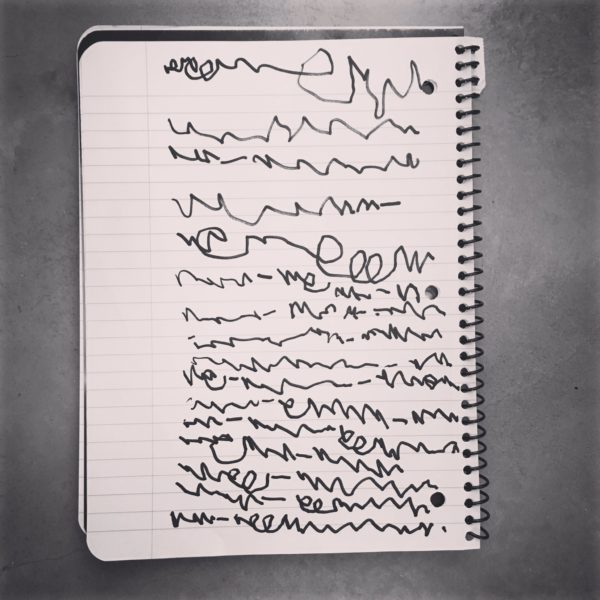
Maureen McHugh has started to blog about the process of her novel-in-progress. She drew this hilarious chart to illustrate the steps:

"THE PROCESS OF WRITING A NOVEL" by Maureen McHugh

I have all but abandoned my graphic novel. If you were to plot my stage on the chart, it’d be “dark night of the soul,” only that dark night was months and months ago. Maybe last year. At this point, I’m way past it, and thinking of a new project, and thinking about how I might be able to actually put out a book-length comic.

I got a lot of advice when I was trying it the first time around. Some told me to just plot the whole thing out, and then draw. Do an outline. I was even told that with 20 pages of artwork and an outline, I might even be able to sell the thing.

This really made my guts churn. I’m with Maureen on this one:

I don’t outline. Outlining is for hacks. I believe in the difficult but fulfilling process of finding my novel as I write it; letting inspiration and the shape of what I’ve already written shape what comes next. Which is why I’ve thrown this novel out five times already.

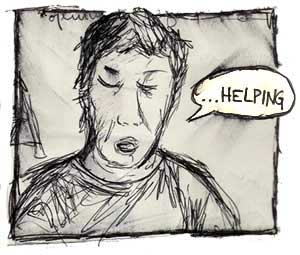
My wife, who always has the best advice, if only I’d listen to it, suggested I just draw the whole thing out in my sketchbook, with nasty, sketchy thumbnails: the drawing equivalent to a “first draft.” Turns out this was the advice that I should’ve followed.

You don’t get a graphic novel much bigger than Craig Thompson’s Blankets. That was almost 600 pages, and his new one is going to be even bigger. Even bigger? How does he do it?

The answer is thumbnails.

“I draw the entire book in this loose ballpoint pen format and edit, before ever starting the final pages. BLANKETS was thumbnailed for a year.”

A YEAR of thumbnails. This makes me very hopeful.

My wife, again, came in with more advice: “You just need to FINISH something?” Ah yes, finishing. Getting to the last of Maureen’s stages, “It’s done and it sucks but it’s better than I thought.”

Craig Thompson, again:

…just…finishing things is a good idea! I had started a lot of projects before then where I’d get 20 pages into it and then I’d lose interest, then a couple months later start up a new project. I was never finishing anything. And so, whether Good-Bye, Chunky Rice has limitations or weaknesses or whatnot, just the fact that I finished it was a big deal, and it ended up being quite successful for that point in my life. So Blankets was a lot easier. Even though it was going to be a much bigger book, I was like, “Well, all I have to do is finish it.”

Because I’m into this Myers-Briggs gobblygook, I should note that my particular personality type, ENTP, is notorious for starting projects and then abandoning them once it figures out how they should be executed.

“ENTPs are less interested in developing plans of actions or making decisions than they are in generating possibilities and ideas. Following through on the implementation of an idea is usually a chore to the ENTP. For some ENTPs, this results in the habit of never finishing what they start.

The “secret to success” for me that my career book gives me?

“Prioritize, focus, and follow through.”

Trying.

SO MUCH TO LEARN, FROM SO MANY TEACHERS

Monday, May 14th, 2007

I was doing the job search thing all morning, doctor’s appointment this afternoon (My doctor was from San Antonio, and he assured me that we would have an excellent time in Austin–the signs continue…), and the reference desk this evening. I have nothing to new to post–only these nuggets of wisdom I’ve gleaned from the corners of the internet:

Maureen McHugh, Ohioan-turned-Austinite, on characterization & plot :

My working definition of plot is character in situation. That’s a dicey definition because I think ‘characterization’ can rest of the flimsiest of textual tricks. A lot of what we think of as characterization comes from what cognitive psychologists call Theory of Mind. (That’s part of what autistic people struggle with and to not have a Theory of Mind is to be Mindblind.) Humans are highly social creatures and we spend a lot of time assuming that other people are, in fact, other people. That they have intentionality, emotion, and that we have a sense of what they are about….

We are so hardwired to make assumptions about other people’s interior states, that we make assumptions about all sorts of interior states. We personify stuff. We describe houses as ‘happy’ or ‘gloomy’. We think that the grocery cart has it in for our car door. We think that characters in fiction are people. We can leap to rather complex assumptions about them on the basis of fairly flimsy details. The details that we find most telling tend to be their actions. So in fact, part of character is what I describe them doing, and if I think of situation and describe characters acting in the situation, I am in fact characterizing as much as I am generating plot.”

* * *

More on plot, sent to me by Brandon, from John Fowles’, The French Lieutenant’s Woman, pg. 406:

The one want combats the other want, and fails or succeeds, as the actuality may be…the writer puts the conflicting wants in the ring and then describes the fight — but in fact fixes the fight, letting that want he himself favors win. And we judge writers of fiction both by the skill they show in fixing the fights (in other words, in persuading us that they were not fixed) andby the kind of fighter they fix in favor of: the good one, the tragic one, the evil one, the funny one, and so on.

“But the chief argument for fight-fixing is to show one’s readers that one thinks of the world around one — whether one is a pessimist, an optimist, what you will.”

* * *

Jordan Crane on splash pages and uniform panel size in an interview with Tom Spurgeon:

I feel like having each panel the same size and the same number on the page, the same spacing and all that, kind of relegates the story to everything that happens inside the panels. The sensational things, the high points and the low points, and the extra dramatics rely on the narrative flow rather than drawing it bigger. So that’s what I tried to focus on: the content of the panels rather than drawing it really big, relying on that. That had always really bothered me in comics. Splash page: this means it matters. This part is important. It always really bugged me….

Oh, God, reading modern superhero comics, none of it makes any fucking sense. It’s not a language. It’s just a bunch of drawings where you can read the words and string it together narratively and get through it. But there’s no language, there’s no punctuation, there’s nothing that makes formal sense about it.

It’s worth noting that Sammy Harkham, Crane’s studio mate, makes similar arguments.

* * *

Tony Millionaire on cartooning and deadlines, from a fantastic profile in the NYTimes

No matter what, I’ve got to get my weekly ‘Maakies’ out….That’s my soul. Without it I’d still be a bum, I’d still be drawing houses. I needed a deadline. That’s the code of the cartoonist: make the deadline.”

* * *

And finally, be sure to check out Craig Thompson’s gorgeous sketchbook pages on his new blog. My favorite of his books, Carnet de Voyage, or Travel Journal, is this times two-hundred and twenty-four.

THE SECRET FEMINIST CABAL RIDES AGAIN

Friday, March 31st, 2006
crowd.jpg

THE AUDIENCE

“World domination through bake sales,” Ellen Klages said. “That’s our goal: world domination. And if there are any homeland security folks here tonight, I can spell that for you.”

At the end of the most beautiful day of the year, Klages and Maureen Mchugh read at Mac’s Backs last night in celebration and promotion of the James Tiptree Award Anthology 2: Sex, The Future, and Chocolate Chip Cookies. Klages is on the Tiptree board, and McHugh’s first novel, China Mountain Zhang, received the award in 1992. For those of us ignorant of James Tiptree Jr., Klages began with the fascinating story, which included secret identities, gender reversals, jealousy, betrayal, and other steamy stuff you can read about here.

“If you know someone who says, ‘Oh, I don’t read science fiction’, send them to the Tiptree website and tell them to get started,” Klages said. “They won’t be disappointed.”

mchugh.jpg
MAUREEN McHUGH

Last time I was here, I found out Dan Chaon and I watch the same trash TV,” McHugh said. “Tonight I’m going to steal one of his ideas, and read a story that isn’t finished. Maybe you can give me suggestions for the ending.”

The story was inspired by a phase one drug trial in England that went terribly wrong. There were eight healthy participants in the room: six were given the drug, and two were given placebos. “The first man said, ‘Oh God, I’m so hot,‘ tore off his shirt, and dropped to the ground. Two minutes went by, and another man said, ‘I’m going to vomit,’ and dropped. So one man is standing there thinking, ‘Well, maybe I got the placebo.’ The drama of the situation! And I’m thinking, what kind of person would choose to do this to themselves?

Maureen read the first 2,000 words, beginning with the sentence, “I was an aggravated bride.” The Bride is from Lancaster, Ohio, and has moved to Cleveland to work at the Clinic. Her life is full of McDonalds and craft shows. The story begins when her new husband’s Ford F-150 breaks down, and he tells her he has gambled their honeymoon money away in Windsor. Eventually, she decides to make some easy money…and that’s where the 2,000 words ended.

I asked Maureen afterwards when was the last time she was in Lancaster.

“I used to go to school in Athens,” she said. “That’s how I know it’s pronounced ‘Lang-caster’ instead of Lan-caster.”

I told her that Lancaster was our getaway in high school. In a twangy voice, “We use’ta get in the truck, put on the tape, and drive to Lancaster!”

And that’s what I love about her stories and hope for in mine–she takes ordinary folks from Ohio and puts them in extraordinary situations.

klages.jpg

ELLEN KLAGES

Ellen’s reading made me a little sad because I only met her a month ago, and in two weeks she’s moving to San Francisco. “I feel like Captain Von Trapp,” she joked. “Tonight will be my last performance in Austria.”

Her great story, “Ringing Up Baby,” is coming out soon in NATURE magazine. It’s about a girl in the future who gets to choose her new sibling: gender, hair color, and all.

And for all the talk about women and gender in the fiction, something fantastic was happening during the reading. I can’t remember feeling warmer at a literary event. There were cookies to eat (McHugh makes a fantastic cookie with rosemary), books for sale, temporary tattoos, and a tip-Tree jar. No ego in sight, just two wonderfully talented and inviting women sharing their storytelling talents.

On the way out, I picked up Ellen’s chapbook and wished her good luck in San Fran. She told Meg and I to take some chocolate chip cookies.
“Like Pat Murphy says, ‘If you can’t change the world through chocolate chip cookies, how can you change the world?’”

11/8 MAC’S BACKS READING

Wednesday, November 9th, 2005

A cool reading in the hot basement at Mac’s Backs last night, with fiction writers Kelly Link, Dan Chaon, and Maureen McHugh. Link is the editor of the literary magazine Lady Churchill’s Rosebud Wristlet, put out by Small Beer Press, which, along with Link’s book of short stories, MAGIC FOR BEGINNERS, published Maureen McHugh’s new book of short stories, MOTHERS AND OTHER MONSTERS. Dan Chaon teaches at Oberlin and lives right here in Cleveland Heights–his most recent book is the novel, YOU REMIND ME OF ME. I heard one of the audience members say, “Oh, God, it’s like the royalty of Cleveland writing here tonight…”

KELLY LINK
Link read the beginning of the title story from Magic for Beginners. She said the story was inspired from “watching a lot of Buffy reruns.” There was a lot of humor, and the world was engrossing, and the mother in the story was a librarian. Her book is good: “Stone Animals,” about a bunny invasion, really creeped me out. She brought along issue #17 of Lady Churchill’s Rosebud Wristlet, so I picked up a copy of that.

DAN CHAON
“I heard Dave Eggers and Spike Jones are doing an adaptation of Where the Wild Things Are,” Chaon said. “So I called up Quentin Tarentino, and we’re going to collaborate on Goodnight, Moon.” Then Chaon read an unfinished story about a two-headed baby. My favorite line of the story was, “‘I think you’ve been blessed,’ the nurse said.”

After the reading, I was browsing the stacks, and Chaon pointed at me.

CHAON: You’re the Zagara’s guy.
ME: Uh, yeah, hi!
CHAON: It’s Austin, right? You’re a cartoonist?

And I’m thinking, how the hell does Dan Chaon know my name and that I draw cartoons? Turns out, someone pointed out this here blog, and one of the posts to him. (So, hi Dan, if you’re reading.) We talked about Zagaras being the true center of Cleveland literary activity, and I sheepishly tried to convince him that I was REALLY a short story writer, and he introduced me to one of his students who was doing a graphic novel in his workshop, which I thought was great: I wish I’d have done some comics in undergrad workshop.

MAUREEN McHUGH
McHugh started out by saying, “I think Dan and I must watch the same TV.” To which Chaon responded, “Oprah?”

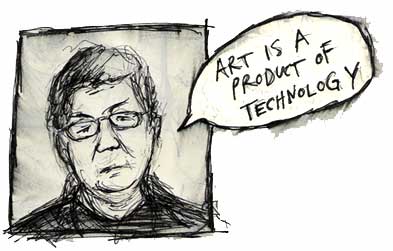
McHugh is currently writing for the gaming industry. “Art is a product of technology,” she said. “The novel only became an art form after the printing press made it cheap to make a book…we’re still figuring out the computer.” She read four stories she’s written for the website lastcallpoker.com, aimed at the site’s target demographic of males 18-34. The first story was about a lesbian ninja named spider. “That’s A Funny Place For A Canoe,” was about a serial killer who shoots a hispanic drug dealer in the head on a street corner. For the third story, McHugh “had to become Elmore Leonard.” “Grind Up Your Bones For Bread” was about a computer hacker named Matt whose plot resembled the life story of William Bonny (aka Billy the Kidd). McHugh had cool postcards with her story “Wicked” printed on the front–I’ve always wondered why more authors don’t do promotional postcards/samples, like visual artists. She ended by holding up her new book and saying, “And if you think the stories in here are going to be anything like what I just read, you’re in for a big surprise!”

And so, there you have it: best reading since McSweeney’s hit Joseph-Beth a couple months ago. Next week: Charles Baxter at Lakewood Public Library.